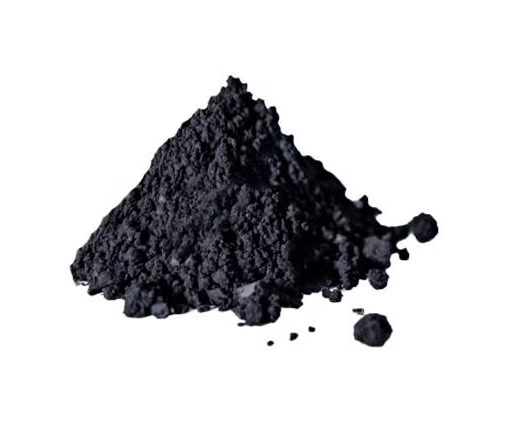
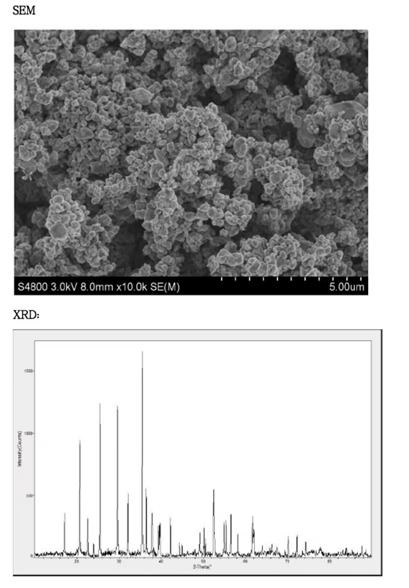
P198-S20 LFP Cathode Material – Carbon-Coated Polycrystalline Powder

Model:

P198-S20

Material Name:

Lithium Iron Phosphate Cathode Material Powder

Standard Package:

150g/bottle, 700g/bottle

Application:

Battery Cathode Material

Overview:

It features excellent electrochemical performance, including good processability, high compaction density, high capacity, and low internal resistance. It is mainly used in the production of lithium-ion batteries.

Main Parameters:

Test ItemUnitSpecificationTypical Value
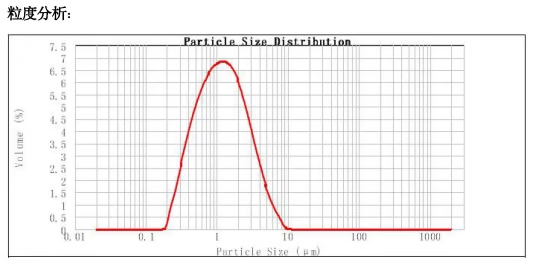
Physical PropertiesParticle Size DistributionD10um≥0.250.39
D50um1.0±0.51.08
D90um≤104.24
Carbon Content%1.50± 0.21.48
Specific Surface Aream2/g11.5± 2.012.3
Tap Densityg/cm30.8±0.20.66
Moisture Contentррm≤1000764
Electrochemical Properties0.1C Discharge Capacity (2.5–3.7 V)mAh/g≥154159.1
0.1C Initial Coulombic Efficiency (2.5–3.7 V)%≥9597.82

Material Characteristics:

  1. High Capacity
    Through specialized doping technology, the ionic conductivity of the LFP material is effectively enhanced, significantly improving the utilization of the material’s specific capacity. Full cell 1C capacity >145 mAh/g, typical values range from 145 to 147 mAh/g.
  2. Excellent Processability
    By optimizing the carbon source, the amount of flocculent carbon between LFP particles is reduced, controlling the material’s median specific surface area between 11.0 and 12.0 m²/g, effectively improving the slurry preparation process.
  3. High Tap Density
    Using a particle mixing technology that leverages the advantages of different particle sizes to achieve better packing of LFP particles, resulting in improved tap density. The tested wound cells achieve a compaction density of 2.45–55 g/cm³.
  4. Outstanding High-Temperature Performance
    Special dense carbon coating technology and selection of large particle ratios help to block electrolyte side reactions and reduce reactive interface areas, contributing to improved cycling performance at high temperatures.